Why Medspas Are Invisible to AI Search in 2026 (And How to Fix It)
I spent last week running AI search audits on independent medspas across four cities. Charlotte. Phoenix. Denver. Austin.
Forty searches. ChatGPT. Perplexity. Google’s AI Overview. “Best Botox injector near me.” “Top medspa in [neighborhood].” “Natural results filler [city].” “MD-led aesthetic practice [city].”
Out of more than thirty independent medspas I checked, exactly two appeared in any AI answer. And those two were in markets without a strong franchise presence.
The rest were invisible. Including practices with 5.0 Google ratings, 1,000+ reviews, board-certified physicians, twelve-plus years in business, and proprietary injection techniques their founders trained their entire team on.
None of that got them into the AI answer. And every patient who opens ChatGPT instead of Google to find an injector will never know they exist.
This is the visibility gap that is quietly reshaping the aesthetic medicine market, and most independent medspas have no idea it is happening.
Why Your 1,000 Five-Star Reviews Don’t Help With AI Search
The confusion starts here. Most medspa owners assume that a strong Google Business Profile, a wall of five-star reviews, and a polished Instagram presence means they are visible across search. That was true in 2023. It is not true now.
AI search tools like ChatGPT, Perplexity, and Google’s AI Overview do not scrape Google Maps, and they barely look at Instagram. They pull from different sources:
- Structured content on your website that answers the questions patients actually type into AI tools
- Schema markup that tells AI engines what your practice is, who runs it, and what it does
- Citation authority across authoritative aesthetic medicine and medical directories
- E-E-A-T signals (Experience, Expertise, Authoritativeness, Trust) expressed through specific clinical credentials
- Question-and-answer patterns written the way patients research aesthetic procedures
A medspa with 1,371 five-star reviews on Google can be completely invisible to an AI model if its homepage is a flat HTML carousel of services and its founder’s credentials live in an image file the AI cannot read.
The Five Things Your Medspa Website Is Probably Missing
1. Service pages that answer how patients actually research aesthetic care
“Botox” is not a page. “How long does Botox last for forehead lines, and what does it actually feel like the first time?” is a page. The difference matters because patients researching injectables ask very specific, very personal questions, and AI models answer those questions instead of browsing a service menu.
Every major service should have its own page that addresses what the procedure is, who it is right for, what the experience feels like, what recovery looks like, what it typically costs in your market, and what differentiates how your practice does it. Write it the way a thirty-eight-year-old patient would ask her phone before booking her first appointment.
2. MedicalBusiness and Person schema markup
Schema markup is structured data embedded in your website’s code that explicitly tells AI engines what your practice is and who runs it. The medspa pages I audit usually have either no schema at all or generic LocalBusiness schema that does not differentiate them from a coffee shop.
At minimum you need MedicalBusiness or MedicalClinic schema (subtypes of LocalBusiness specifically for healthcare), Person schema for your founder and lead injectors with their credentials, NAP data in structured format, AggregateRating with your real review count, individual Review nodes so AI engines can quote actual patients, and FAQPage schema on your most-trafficked service pages. This is the difference between an AI engine guessing what you are and knowing exactly who runs your practice and what makes them credible.
3. Author and injector bios with verifiable credentials
E-E-A-T is how AI systems decide whether to cite a source. For aesthetic medicine, this means content needs to be tied to a specific, named provider with verifiable credentials.
Your founder and lead injectors each need a bio page that lists their license type (MD, DO, NP, PA-C, RN), school and graduation year, board certifications (especially ABMS specialties relevant to aesthetics), specialty training (residencies, fellowships, manufacturer-sponsored advanced training like Allergan’s AMI or Galderma’s GAIN), years in practice, society memberships (ASAPS, ASDS, AAFE, ASLMS), and any teaching or KOL credentials. This is not vanity. It is the structured signal AI models use to decide whether to cite your practice when a patient asks “best MD-led injector in [city].”
4. FAQ content built around real patient questions
Patients do not search “lip filler.” They search “how much does lip filler cost in Phoenix” and “will I look fake if I get lip filler the first time” and “how long does lip filler take to settle.” These are fundamentally different queries from the bullet points on your services page.
A well-structured FAQ section, with real questions pulled from what patients ask at consultation, is one of the fastest ways to start appearing in AI answers. Think about the twenty questions your front desk and injectors field every week. Every one of those is a search query a patient typed into ChatGPT this morning.
5. Consistent citation presence in the right directories
AI models pull citations from authoritative directories. For independent medspas, the ones that matter are RealSelf, the ASAPS member directory, the ASDS find-a-dermatologist tool, your state aesthetic society if one exists, AAFE, and your local Chamber of Commerce. RealSelf in particular is a citation source AI engines lean on heavily for aesthetics queries.
The key word is consistent. Your practice name, address, and phone number need to match exactly across every listing. One directory that says “Suite 200” and another that says “Ste. 200” creates a citation conflict that erodes your authority score with AI systems.
What to Fix First
If this list looks like a lot of work, you are right. But not all of it is equal.
Start with schema markup. It is a one-time technical fix with an outsized impact. A developer can ship MedicalBusiness, Person, FAQPage, and Review schema on a medspa site in roughly a week. It does not require ongoing content work and it moves the needle in AI engines almost immediately because most of your competitors have not done it.
Then write the founder bio. The single highest-leverage page on a medspa website is the founder’s bio, because aesthetic medicine is a credential-driven category. If you are an MD, an NP with 8,000 hours of injection experience, an RN who built a proprietary technique, or a PA-C with subspecialty training, that needs to live in structured, machine-readable text on a dedicated page. Not in a hero image. Not in a PDF. Not implied through testimonials.
Then rewrite your top three service pages. Pick the three services that drive the most revenue, usually neurotoxin, filler, and either laser or RF microneedling, and rewrite each page to answer the questions a patient would ask out loud rather than describe the procedure clinically. Then work through the rest as time allows.
The FAQ section and citation cleanup can happen in parallel and can be batched into a single content sprint.
The Competitive Reality
Here is why this matters more right now than it did even six months ago. The franchise chains have noticed AI search. Ideal Image, LaserAway, and a handful of dermatology DSOs are already shipping schema, structured Person markup, and AI-targeted service content at scale. They have marketing teams and budgets to do it.
The independent medspas in your market mostly have not. The window where moving on this delivers a real, durable competitive advantage is open, and it is closing faster than the social-media optimization window did.
Practices that show up in AI answers become the obvious choice for patients who use AI to research. Practices that do not show up are not in the consideration set at all. And patients who use AI for aesthetic research are typically higher-intent, better-informed, and more ready to book at full price than patients who scroll Instagram.
This is not about chasing a trend. It is about being findable to the patients who are actively looking for you right now, in the tool they actually opened.
William Hunt is a healthcare technology consultant who runs HuntGrowth, a marketing practice for independent medical and aesthetic practices. His background combines computer science and federal data work (Department of Defense, the White House, AARP) with fifteen years of marketing execution. He works with one to three practices at a time on AI search visibility, schema implementation, and patient acquisition.
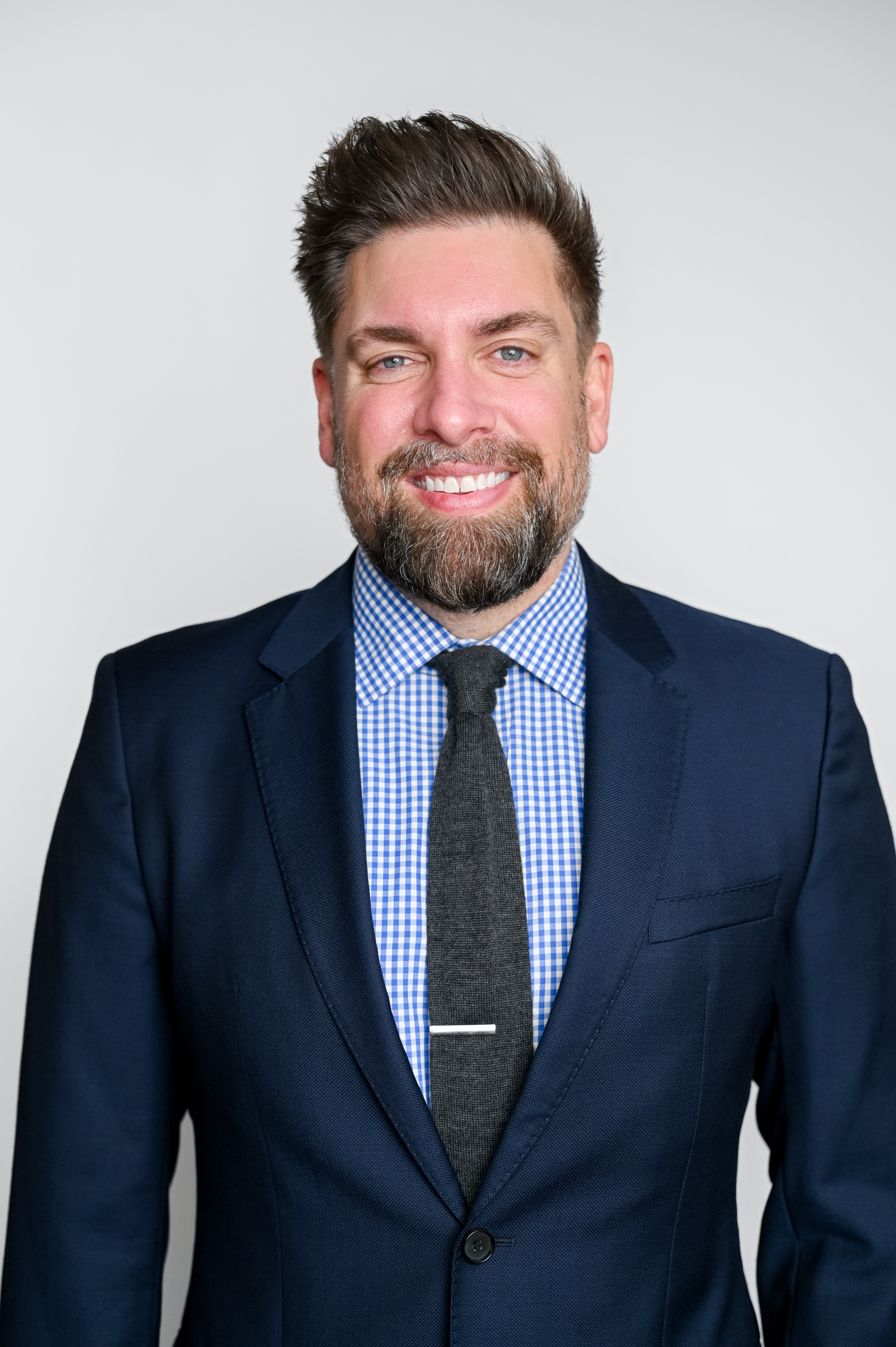
William Hunt
Founder of HuntGrowth. Computer scientist, Johns Hopkins MBA, 21+ years building growth engines for organizations from the Pentagon to healthcare AI.
Learn more →Want the whole system, not just this post?
This is one slice of how I market in health tech. The full playbook is 25 chapters and 210 pages of the exact frameworks I run. Long sales cycles, the buying committee, HIPAA-aware campaigns, the 90-day plan you can start Monday.
See the Healthcare SaaS Marketing Playbook